n8n alternative: self-hosted, governed, source-available
An honest comparison of the self-hosted n8n alternatives buyers evaluate — Activepieces, Node-RED, Kestra, Windmill — and the free-tier governance gap none of them fill.

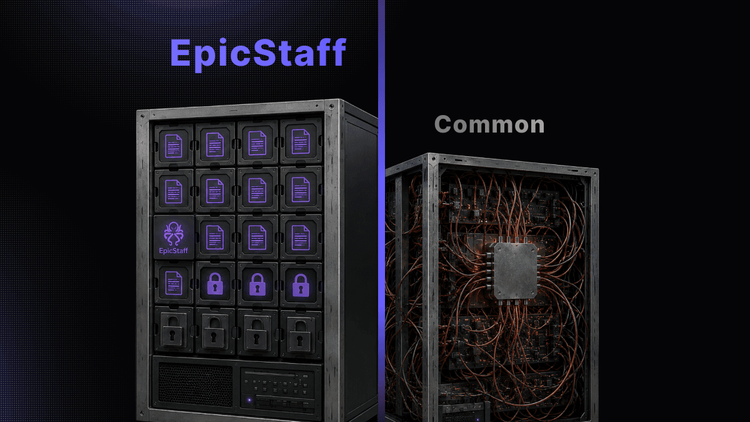
n8n alternative: self-hosted, governed, source-available
Somewhere in your estate there is an n8n instance nobody formally owns. A capable engineer stood it up, it moves real data every day, and it worked fine — until an IT-general-controls review asked three questions: who has access to it, who changed which workflow and when, and where is the audit trail. With NIS2 obligations landing across the EU, those questions have stopped being theoretical.
If that is roughly your situation, you are searching for an n8n alternative that is self-hosted, survives an audit, and does not gate the ability to prove who did what behind a paid tier. This is an honest comparison of the alternatives buyers actually evaluate — Activepieces, Node-RED, Kestra, Windmill, and the SaaS route (Make, Zapier) — including what each is genuinely good at, and the one thing none of the self-hosted options ships by default: an enterprise governance story in the edition you can run for free.
If you are already comparing EpicStaff against n8n specifically, the EpicStaff vs n8n comparison covers that dimension by dimension. This post is the wider map.
Where governance lives: the free-tier comparison
The short answer to the audit scenario above, before the platform-by-platform tour:
| Platform | Core licence | RBAC / SSO / audit trail in the free self-hosted edition? |
|---|---|---|
| n8n | Sustainable Use License (source-available, not OSI) | Partly — project-role RBAC in the free Registered Community edition; custom roles, SSO and audit-log streaming in paid tiers (n8n docs, accessed 2026-09-06) |
| Activepieces | MIT (community edition) | No — RBAC, SAML SSO, SCIM, audit logs under commercial licence |
| Node-RED | Apache-2.0 | Not built-in — basic editor auth; RBAC/audit are DIY |
| Kestra | Apache-2.0 (core) | No — SSO, RBAC, audit logs are Enterprise Edition |
| Windmill | AGPLv3 (community edition) | Partial — audit logs with 14-day retention; SAML/SCIM and extended retention in Enterprise |
| Make / Zapier | Proprietary SaaS | n/a — not self-hostable |
| EpicStaff | PolyForm Perimeter 1.0.0 (source-available, not OSI) | Yes — RBAC and a persistent, exportable (JSON/CSV) audit trail in the free tier; SSO in the paid Enterprise tier |
Facts per each vendor's own documentation; sources and access dates in the substantiation file. Tiers change — re-verify before relying on this table for a procurement decision.
Why teams go looking for an n8n alternative
n8n is a capable product, actively developed, with a large community and one of the broadest connector libraries in self-hosted automation (n8n lists 400+ integrations). Teams that leave it, or decide against it, usually cite one of four reasons:
- Licence. n8n is source-available under its Sustainable Use License plus an n8n Enterprise License — not OSI open source. That is a legitimate model (EpicStaff makes a similar trade, more on that below), but it surprises teams who assumed "self-hostable" meant "open source."
- Some governance sits in paid tiers. Per n8n's own documentation (accessed 2026-09-06), project-role RBAC is included in the free Registered Community edition; custom roles, SSO (SAML/LDAP) and audit-log streaming are paid.
- Security is now your job. Self-hosting means you own the patch cadence — and n8n's 2026 CVE record shows that is a real operational commitment (details below, with dates).
- Agent workloads. n8n added AI agent nodes to a workflow-automation core. Teams whose primary workload is agents — document reasoning, multi-step handoffs, knowledge-base queries — increasingly want a platform where the agent is the primitive, not a node.
The self-hosted alternatives, honestly
Each of these is good at something. Here is what, stated plainly.
Activepieces A no-code builder on an MIT-licensed community core — genuinely open source — with a growing piece library and heavy AI/MCP investment. For a governed deployment, the catch: per Activepieces' own licence documentation, SAML 2.0 SSO, SCIM, granular RBAC, and audit logs live in a separately licensed commercial edition, not in the MIT core. Great fit: business-team automation with a low IT-general-controls burden. Poor fit: the audit-finding scenario this post opened with — unless you buy the enterprise edition.
Node-RED Apache-2.0, OpenJS Foundation, mature and stable — strong for event-driven and IoT/edge work, down to a Raspberry Pi. It is honestly not an enterprise governance platform: basic editor authentication, but multi-user RBAC, SSO, and a platform-level audit trail are not built in — hardening it for a regulated environment is a DIY project around the tool. Great fit: edge and IoT event wiring. Poor fit: named-principal accountability out of the box.
Kestra Declarative YAML orchestration on an Apache-2.0 core with strong scheduling — the data-engineering choice. Per Kestra's own OSS-vs-paid documentation, SSO, RBAC, multi-tenancy, and audit logs are Enterprise Edition features: the open-source core is the orchestrator; the governance layer is the product you buy. Great fit: scheduled data pipelines owned by a platform team. Poor fit: free-tier governance.
Windmill Turns Python, TypeScript, Go, and Bash scripts into workflows and internal apps, with a strong performance story. Its AGPLv3 community edition does include audit logs — with 14-day retention per Windmill's documentation; extended retention, SAML SSO, and SCIM sit in the Enterprise Edition. Great fit: script-first engineering teams. Poor fit: teams without developers, or audits that need more than two weeks of log history on the free edition.
The SaaS route: Make and Zapier Many "n8n alternative" searches end here: the largest connector catalogues, the fastest time to value, no infrastructure or patching. That convenience is exactly the trade — your data and credentials transit a vendor's cloud, which becomes part of your audit scope, processor agreements, and residency story. If self-hosting is a requirement — policy, regulation, or an auditor's finding — they are not in your evaluation set at all.
Which is better than n8n?
There is no single answer — only better for what. If connector breadth in a self-hostable tool is what you need, n8n itself is hard to beat — it has one of the broadest connector libraries in the category — and Make or Zapier beat it only by giving up self-hosting. For scheduled data pipelines, Kestra is the stronger orchestrator — with its governance layer in the paid Enterprise Edition. For script-first engineering teams, Windmill — with 14 days of audit retention on the free edition. For edge and IoT, Node-RED — with governance as your own DIY project. For no-code business users on an MIT core, Activepieces — with RBAC, SSO, and audit logs under the commercial licence.
If the question is "which self-hosted automation platform survives an IT-general-controls review in the edition I can actually run" — RBAC enforced at the platform layer, actions persisted to an exportable audit trail, with single sign-on to your identity provider in the Enterprise tier — that is the gap in the table above, and it is the specific gap EpicStaff was built to fill: governed, self-hosted automation and AI agents you own.
Is there a free n8n alternative?
Yes, several. Every self-hosted platform above has a free edition: n8n Community, Activepieces Community (MIT), Node-RED (Apache-2.0), Kestra open-source core, Windmill Community (AGPLv3). "Free n8n alternative" is the easy part of the question.
The harder part is what the free edition contains. Across this category, governance is the usual upsell: SSO and audit capability sit in paid tiers more often than not, and RBAC varies by platform — the table above shows which. EpicStaff takes the opposite position: RBAC ships in the free source-available tier, and sessions and interactions are persisted and exportable as JSON or CSV — because for a regulated buyer, being able to evidence what the system did is not a premium feature, it is the price of entry. If you are choosing a free tier to pilot with, compare what you will have to buy later to pass an audit, not just what costs nothing today.
What is replacing n8n?
Honestly: nothing is "replacing" n8n. It is actively developed, widely deployed, and its community keeps growing. What is changing is the evaluation criteria around it. Two shifts are doing the work behind this search query:
- Agent workloads. Automation buyers increasingly arrive with AI-agent requirements, not just connector requirements. That pulls evaluations toward agent-native platforms and away from workflow tools with agent nodes bolted on.
- Governance pressure. NIS2 obligations are landing across the EU, and auditors have learned to ask about the ungoverned automation instance in the corner. The platforms gaining ground are not "n8n but cheaper" — they are platforms that can show access control and an audit trail in the deployment the buyer actually runs.
What is being replaced is not n8n; it is ungoverned DIY automation — whatever tool it runs on. If that instance is the one in your estate, the EpicStaff vs n8n comparison shows what the governed version of the same workload looks like.
Self-hosting n8n is not the same as governing it
A common assumption in this evaluation: "we self-host it, so it's secure and compliant." The 2026 record shows why that does not follow — stated factually, because n8n's team patches actively and credit for that is due.
In early 2026, n8n disclosed a wave of critical vulnerabilities, including an unauthenticated flaw (CVE-2026-21858, "Ni8mare") that allowed a remote attacker to read files on the underlying server, disclosed in January 2026, and an authenticated remote-code-execution flaw in the workflow expression evaluator (CVE-2025-68613) disclosed in December 2025 and listed in CISA's Known Exploited Vulnerabilities catalogue as actively exploited. In May 2026 the vendor disclosed three further advisories, each requiring an authenticated user with workflow-edit rights (published on NVD in June 2026): a Git-node argument-injection flaw that allowed such a user to read arbitrary files on the host (CVE-2026-44790), and two node-level input-validation flaws — in the HTTP Request node (CVE-2026-44789) and the XML node (CVE-2026-44791) — that, combined with other techniques, could lead to remote code execution. n8n has shipped fixes for all five — see each advisory for the patched versions.
Read that as an auditor would. "Authenticated RCE via workflow editing" means who can edit workflows is a security boundary — which makes RBAC and named-principal attribution security controls, not conveniences. And every self-hosted deployment owns its patch cadence: which version are you on, who approved the upgrade, where is that recorded?
To be equally honest in the other direction: this burden applies to any self-hosted platform, EpicStaff included. Self-hosting always shifts responsibility to you. The question that separates the platforms is whether the edition you run gives you the controls to carry that responsibility — access control, attribution, an exportable audit trail — or whether those controls are the upsell.
Is there an open-source n8n alternative? (And what source-available means)
If OSI open source is a hard requirement, the honest answer: Node-RED (Apache-2.0), Kestra's core (Apache-2.0), Windmill's community edition (AGPLv3), and Activepieces' community edition (MIT) qualify. n8n does not — its Sustainable Use License is source-available. And EpicStaff does not either: EpicStaff is source-available under PolyForm Perimeter 1.0.0, and we say "source-available," not "open source," on purpose. You can read the code, run it on your own infrastructure, and modify it for your own use; the limit is that you cannot repackage it as a competing hosted product. The full licence is public in the repository.
For a governed deployment, though, the durable question is usually not OSI purity — it is ownership. Can your engineers inspect the code that touches your data? Can the platform run entirely on infrastructure you control, including with local or self-hosted models? Does the audit trail live in your database, surviving any vendor relationship? "Source-available plus you own the whole stack" answers those questions — and on any platform on this page, check which edition carries the governance features before the licence debate settles anything.
Where EpicStaff fits — and where it does not
EpicStaff is governed, self-hosted, source-available automation and AI agents — you own and govern the whole stack: your infrastructure, your LLM, your data, your audit trail. Agents are the primitive, not a node type: each has an explicit role, prompt, tool set, and knowledge base, and the RBAC layer and the persistent, exportable audit trail are built around that agent model, in the free tier.
Where it does not fit, plainly: if your evaluation is primarily about connector breadth — hundreds of pre-built SaaS integrations, trigger-action wiring between existing tools — n8n, Activepieces, Make, or Zapier will serve you better today, and we would rather tell you that here than after a pilot. We do not compete on connector counting.
If your evaluation looks like the scenario this post opened with — an auditor's finding, NIS2 landing, a requirement to own and govern the stack — start with the EpicStaff vs n8n comparison for the dimension-by-dimension view, or look at the platform and what Enterprise adds for regulated procurement. The source is public: github.com/EpicStaff/EpicStaff.