
featured
Whose key is it? When the AI in your tools runs on the vendor's account
On a hosted tool, the AI often runs on the vendor's key: its quota, its gateway, its model, its bill. What to check before you depend on it.
BLOG
featured
On a hosted tool, the AI often runs on the vendor's key: its quota, its gateway, its model, its bill. What to check before you depend on it.

After many messages, an AI agent's chat exceeds the model's context window. Who can start it over, what happens at the limit, and what to check first.

An agent that loops spends money until something stops it. Which limits act while the run is going, and what to check in any tool before you trust it.

Long jobs time out or hold up other work, and nobody knows how much load the tool takes. Five questions to ask about runs at the same time.

An AI agent produces five kinds of data, and they can sit in five different places. Ask about each one separately, then write the answers into the contract.
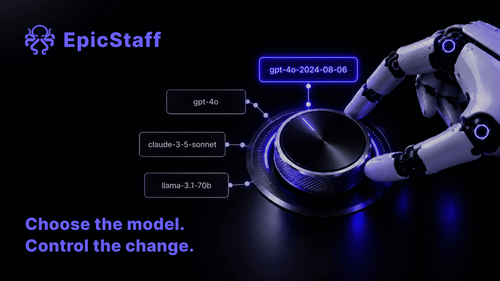
A vendor model update can change a live agent that nobody touched. What a pinned model version gives you, what it cannot, and who decides the change.
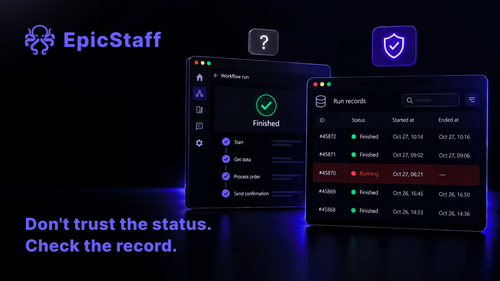
The screen says finished, the database says running, the error names the wrong cause. Why status and record disagree, and which one to trust.

Article 50 has applied since 2 August 2026. What it asks of providers and deployers, why a line in your terms is not enough, and why transparency is native to a governed platform.

Six decisions that say what an agent may do, who owns it, and what gets written down while it works. Make them before the first agent runs.
A change that fixes one case can quietly break another while every run stays green. Four regression checks for any AI agent workflow.

When the server running your AI agents restarts, long runs stop and retries can repeat a payment. Plan what must survive, and test it in one afternoon.
A trigger that says on does not prove your flow ran. Four checks for any AI agent platform: the switch, the next run, the run list and what started it.